
Latest news
The structural gaps that keep supply teams in reactive mode

Commitments stop at the purchase order
Once a PO ships out the door, material constraints and capacity shifts reach buyers late, often through email chains that no system reads.

Shipment status carries no business context
A port delay looks identical to every other alert until someone traces it to the SKU, order, and production line it threatens.

Logistics events never reach supply decisions
Delays sit in the TMS while supply planners work from plans built weeks earlier, so corrective action starts after the decision window closes.


Inventory targets rest on assumptions
Without a live view of stock at suppliers, in transit, and at contract manufacturers, teams buy certainty with safety stock and raise inventory carrying costs.
How to connect logistics visibility with supply planning
The eBook lays out what changes when supplier signals, shipment status, and demand plans run on one connected view.

Earlier warning on supply risk. Supplier constraints surface while alternate sources, re-routing, and rescheduling remain realistic options.

Exceptions ranked by business impact. Teams act on the delays that threaten material availability and skip the ones absorbed by buffer.

Procurement time redirected to strategy. Automated exception detection replaces the daily hunt for shipment status, freeing buyers for supplier development and cost work.

Production commitments that hold. Supply planners schedule against confirmed inbound logistics rather than assumptions, which protects customer promises.

Leaner working capital. Confidence in supply commitments lets companies right-size safety stock and reduce inventory carrying costs and expedite spend.
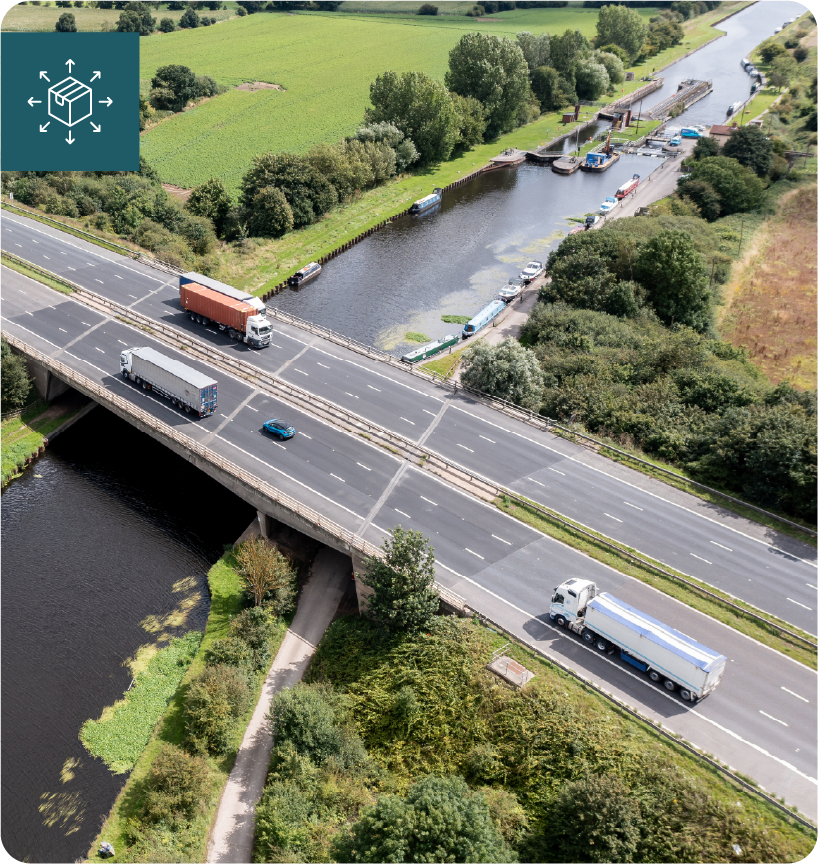
How connected logistics turns shipment signals into supply decisions
Four capabilities do the work behind supply assurance.

Supplier collaboration on a shared network
Suppliers post inventory, production status, and forecast commitments to one platform instead of scattered spreadsheets. Structured supplier onboarding makes each new partner an extension of the same live picture.

Logistics visibility with order context
Carrier, port, broker, and forwarder events link to the orders and production schedules they affect, so every alert arrives with the commitments it puts at risk.

Procurement orchestration across functions
Exception workflows span procurement, planning, and logistics without manual handoffs, so one signal triggers one coordinated response.

Alignment of commercial and physical flows
Multi-party order models keep three elements – what was bought, what is moving, and what will arrive – connected across multiple ERPs and trading partners.
VIDEO
Inside Jabil’s Transformation
How one global manufacturer digitalized supplier forecast communication across its entire supply base to strengthen customer commitments.
Watch the video →


Why e2open sits at the center of supply assurance
E2open runs supplier collaboration, connected logistics, and planning on a single network, which removes the integration gaps that stitched-together tools leave behind.
That scale shows up in four proof points:

500,000+ connected trading partners
18 billion+ transactions processed each year
Named a Leader in Gartner® 2026 Magic Quadrant™ for Transportation Management Systems for Fourth Consecutive Year
Named a Leader in the IDC MarketScape: Worldwide Multi-Enterprise Supply Chain Commerce Network 2025
Turn visibility into supply assurance
Disruption is a constant in multi-tier global supply chains. The advantage belongs to companies that see risk early enough to act on it.
Download our eBook to learn how connected supplier, logistics, and planning signals protect production schedules, reduce emergency freight, and make customer commitments dependable again.

Want to learn more?


Frequently asked questions
What is supply assurance?
Supply assurance is the ability to know what materials will arrive, when they will arrive, and which orders or production lines face risk, early enough to act. It combines supplier collaboration, logistics visibility, and planning context in one connected view rather than three separate systems.
How is supply assurance different from supply chain visibility?
Visibility reports where a shipment sits. Supply assurance explains what that shipment status means for material availability, which customer commitments it threatens, and what corrective action to take. Visibility informs. Supply assurance changes decisions.
How can companies connect logistics visibility with supply planning?
Companies connect the two by linking shipment events to the purchase orders, parts, and production schedules they support, then feeding those signals directly into supply plans. When a delay surfaces, supply planners and buyers see the same impact at the same time and coordinate one response.
What role does supplier collaboration play in supply risk management?
Supplier collaboration replaces static purchase order data with live commitments. Suppliers share inventory positions, production status, and forecast changes on a shared platform, which gives procurement teams early warning on supplier risk instead of confirmation after a missed delivery.
Does supply assurance require replacing ERP or TMS systems?
No. Most organizations already hold the underlying data. The practical path connects existing ERP, TMS, and supplier systems through procurement orchestration, proves the model on a critical product line or supplier group, then scales across regions and categories.
Ready to turn visibility into better business outcomes?
Connect with an e2open expert to see how connected supply assurance can help your teams see risk earlier and act on it before production and customer commitments are affected.
E2open subscription center
Subscribe to receive e2open updates
Interested in learning more? Stay current with the latest e2open news – from company updates to thought-leadership pieces, and so much more!