MULTI-ENTERPRISE VISIBILITY
Remove the opacity between
upstream and downstream
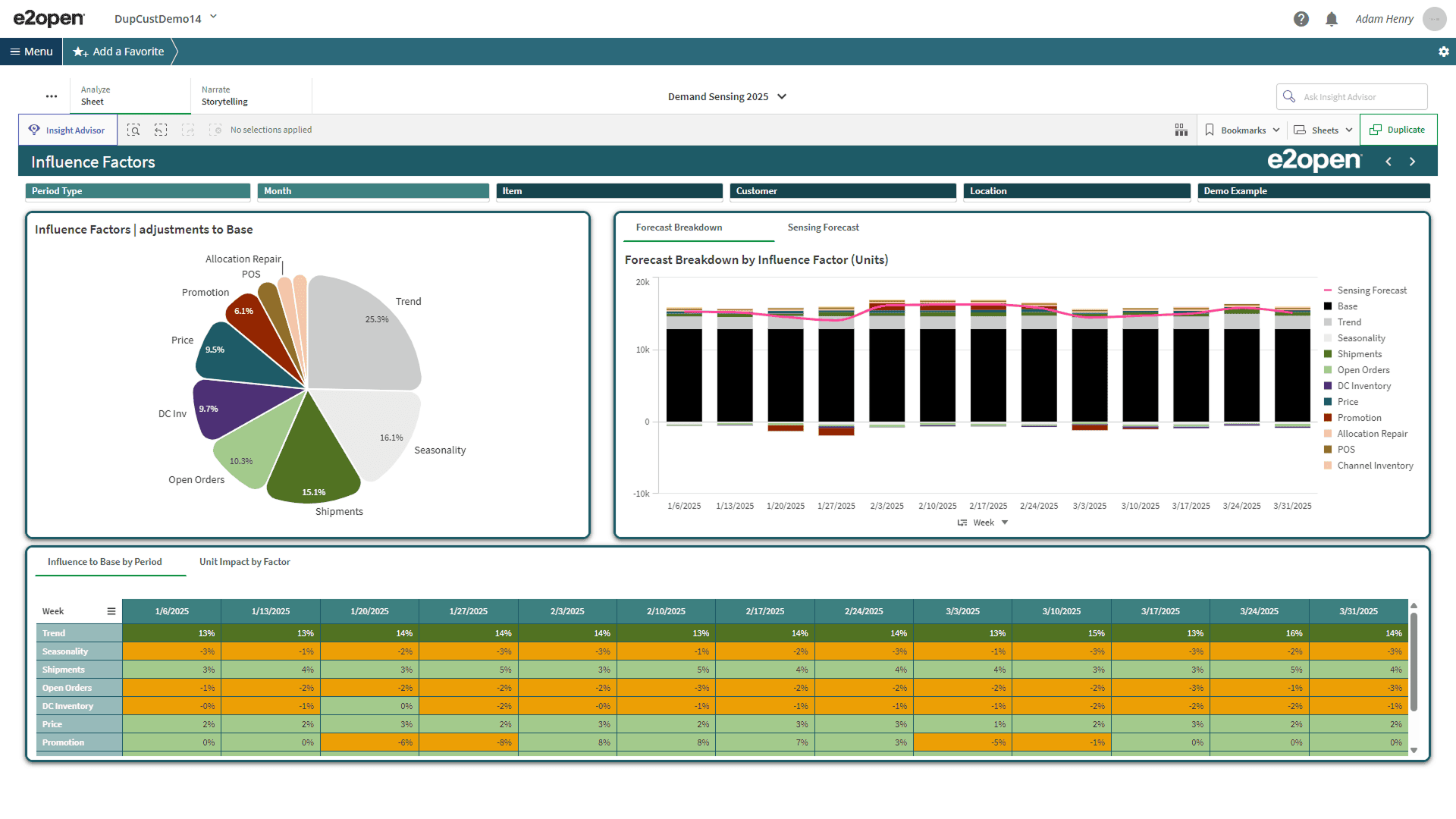
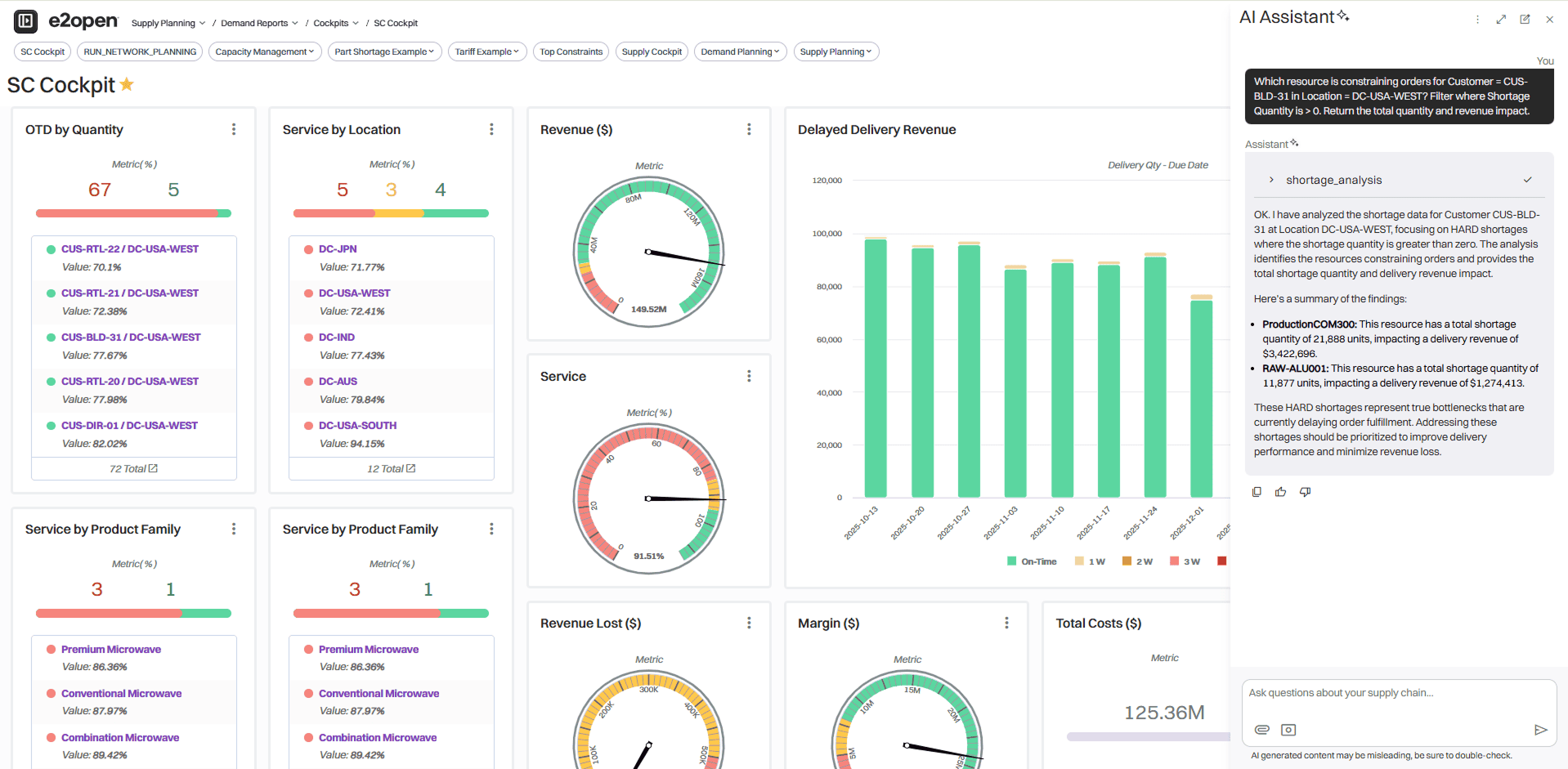
SUPER PLANNERS
Upskill planners with agentic
AI and cross-functionality
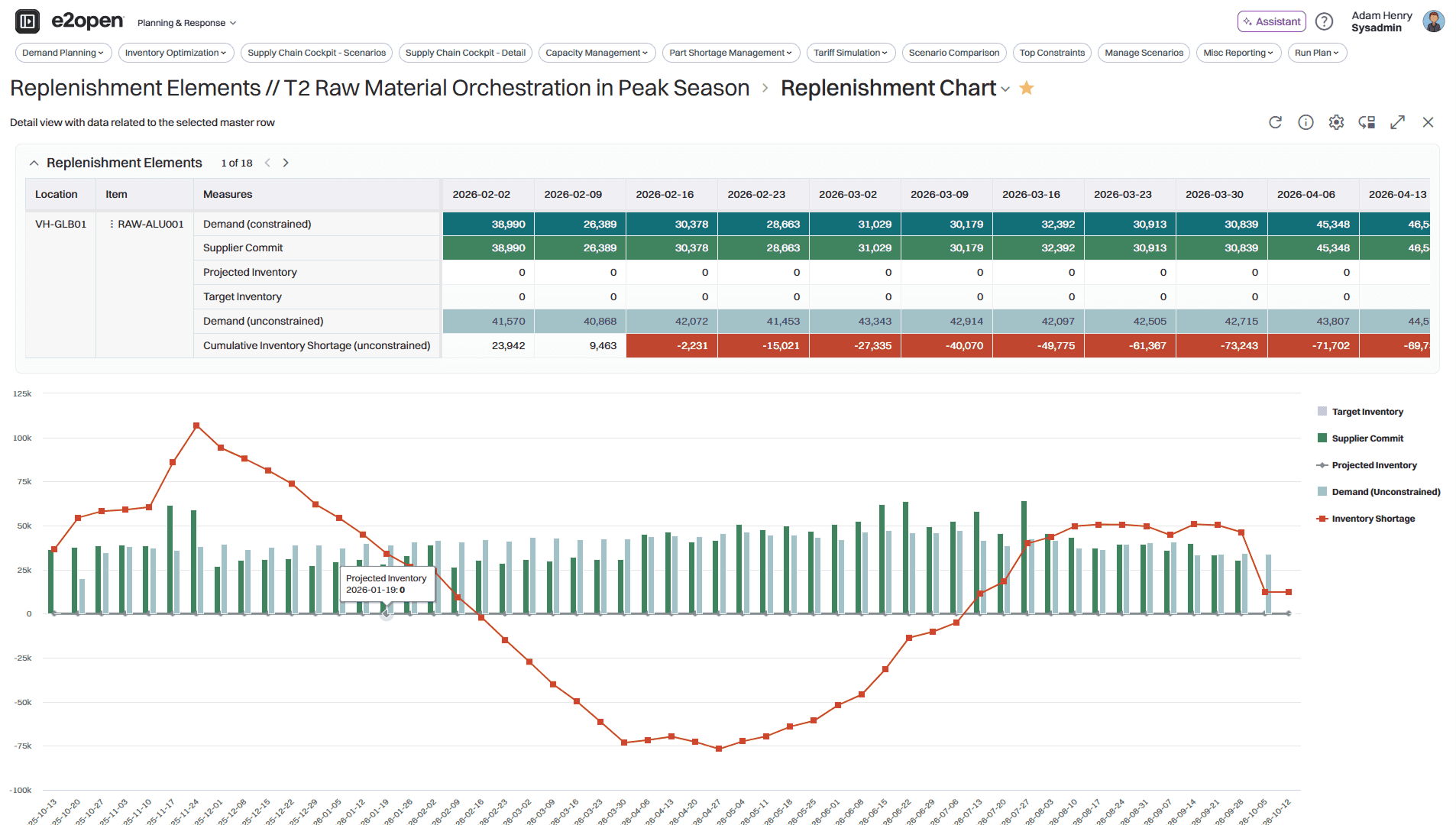
DEATIALED PRODUCTION SCHEDULING
Get everything from one place
with synchronized plans
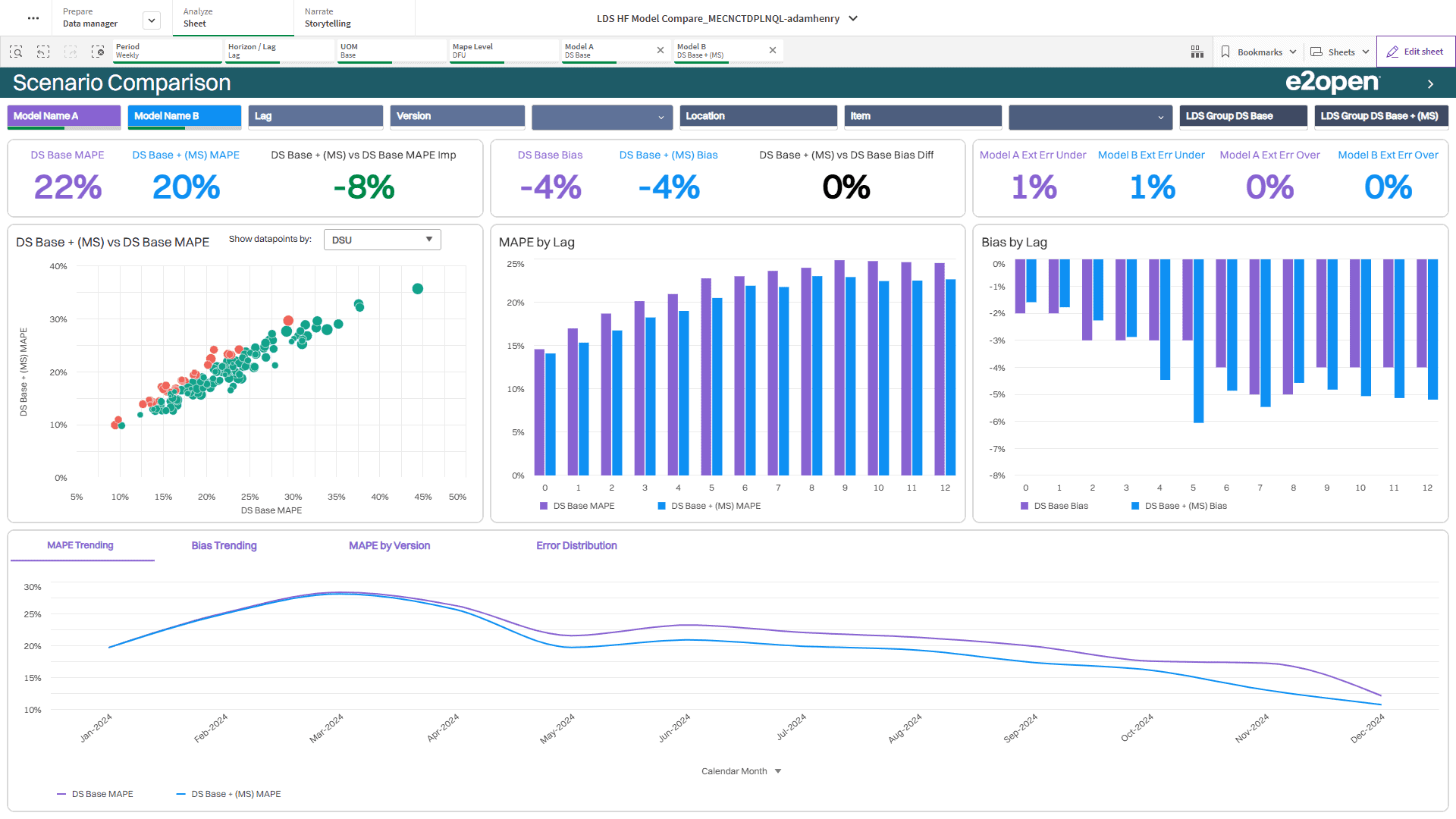
FOCUS
Create the right plan with
scenario-management analytics

SCALE
Align decisions across time,
product, and network
STRATEGIC ALIGNMENT
Get the right mix of service,
containment, and growth
The planning engine behind global industry leaders




Demand volatility
Struggling to align supply with unpredictable global demand

Siloed data
Difficulty accessing real-time, integrated data across regions and functions

Supply disruptions
Addressing risks from geopolitics, material shortages, and logistics delays

Forecast accuracy
Pressure to improve forecast accuracy and cut inventory cost

Sustainability goals
Balancing cost efficiency with ESG and compliance requirements

Skills gap
Difficulty finding and retaining skilled planners and analysts
EBOOK
The Rise of the Supply Chain Super Planner
Discover how the planner role is evolving and what organizations must do to enable the next generation of supply chain super planners.


SOLUTIONS BRIEF
Shadow Planning: Reveal the blind spots in your supply chain
Learn how a supply chain digital twin can help you anticipate disruptions before they affect your bottom line.
CONNECTED VISIBILITY
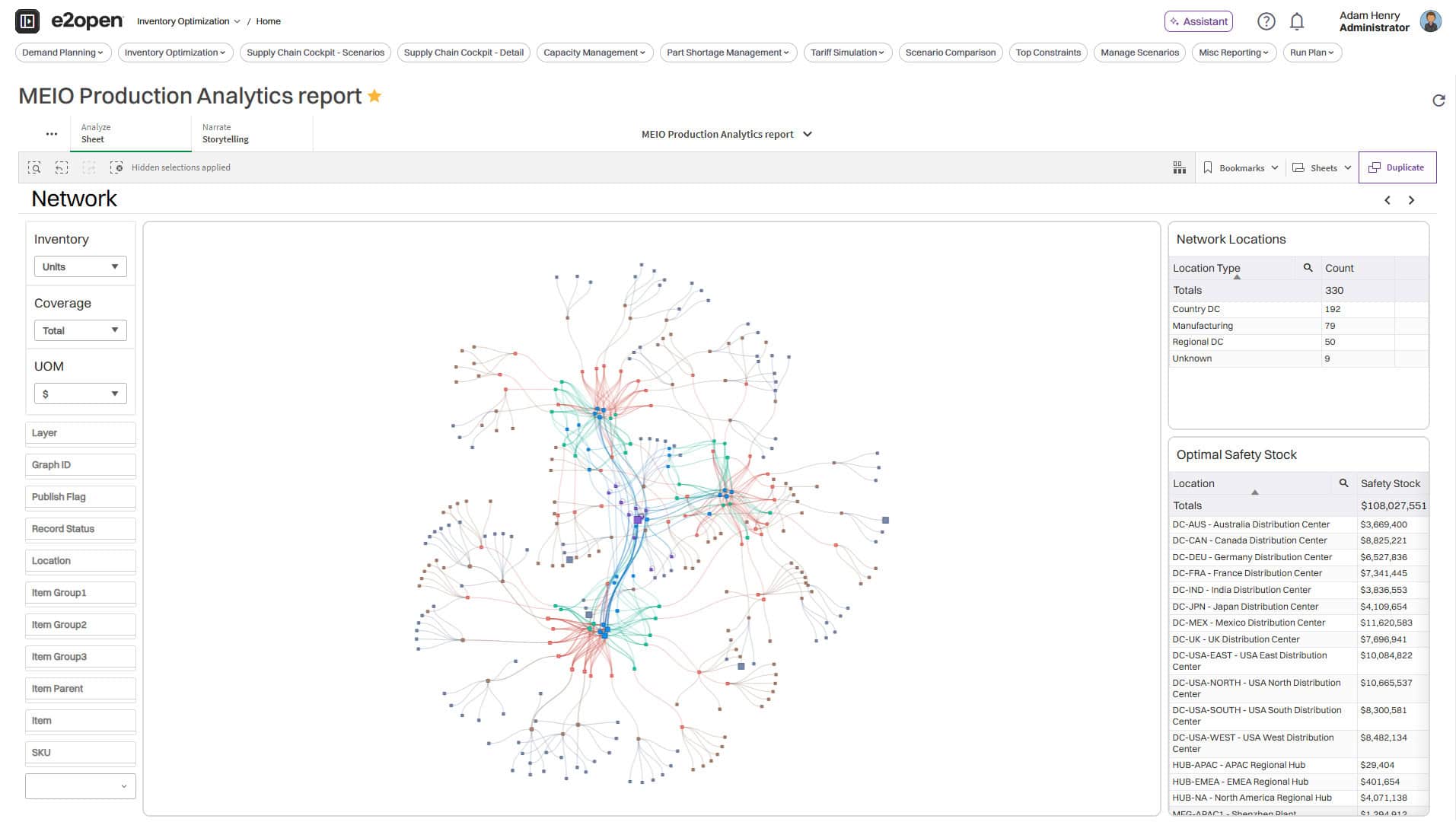
Combine downstream channel data with upstream supply visibility
Your contract manufacturer (CM) is encountering unforeseen delays. By incorporating n-tier supplier data, Connected Planning lets you identify the causes of part shortages at your CM’s supplier and collaborate with them to find mutually-beneficial solutions and maintain production schedules.


CONNECTED MODEL
Teams work from one source of truth for faster collaboration
A global electronics manufacturer faces sudden demand spikes for a new product across multiple regions. With Connected Planning, planners in North America, Europe, and Asia collaborate in real time, sharing insights and updating scenarios as market conditions change. The team quickly identifies bottlenecks, reallocates inventory, and adjusts production schedules, ensuring products reach customers faster and maintain service level expectations.
CONNECTED SCENARIOS
Model, compare, and promote “what-if” scenarios in real time
When your company faces disruption, e2open’s scenario planning capabilities enable your team to quickly model inventory changes, expedite orders, evaluate impacts, coordinate responses, and update baseline plans to capture opportunities and reduce risks. Connected planning lets planners collaborate seamlessly, test ideas, and quickly respond to disruptions or opportunities, all within a single connected platform.


CONNECTED WORKFLOWS
Bring people and application systems together in one workflow
A food manufacturer builds a workflow to automate S&OP planning across plants and distribution centers. As planners align demand forecasts with constrained supply, the Connected Planning system orchestrates each step, assigning tasks, tracking progress, and monitoring compliance, so every update and adjustment is instantly visible, auditable, and executed according to company standards.
CONNECTED DECISIONS
Give planners the power of AI and automation to align decisions with goals
If a shipment of raw materials is delayed for 5 days due to port congestion, weather, or terrorist attacks on vessels, you can link the transportation disruption back to the plan for an immediate impact assessment and initiate corrective action if needed. Connected Planning gives planners the power of AI and the flexibility to work at any level of detail or time horizon by automating micro-decisions, aligning every decision with business goals for greater agility, resilience, and profitability.


CONNECTED INTELLIGENCE
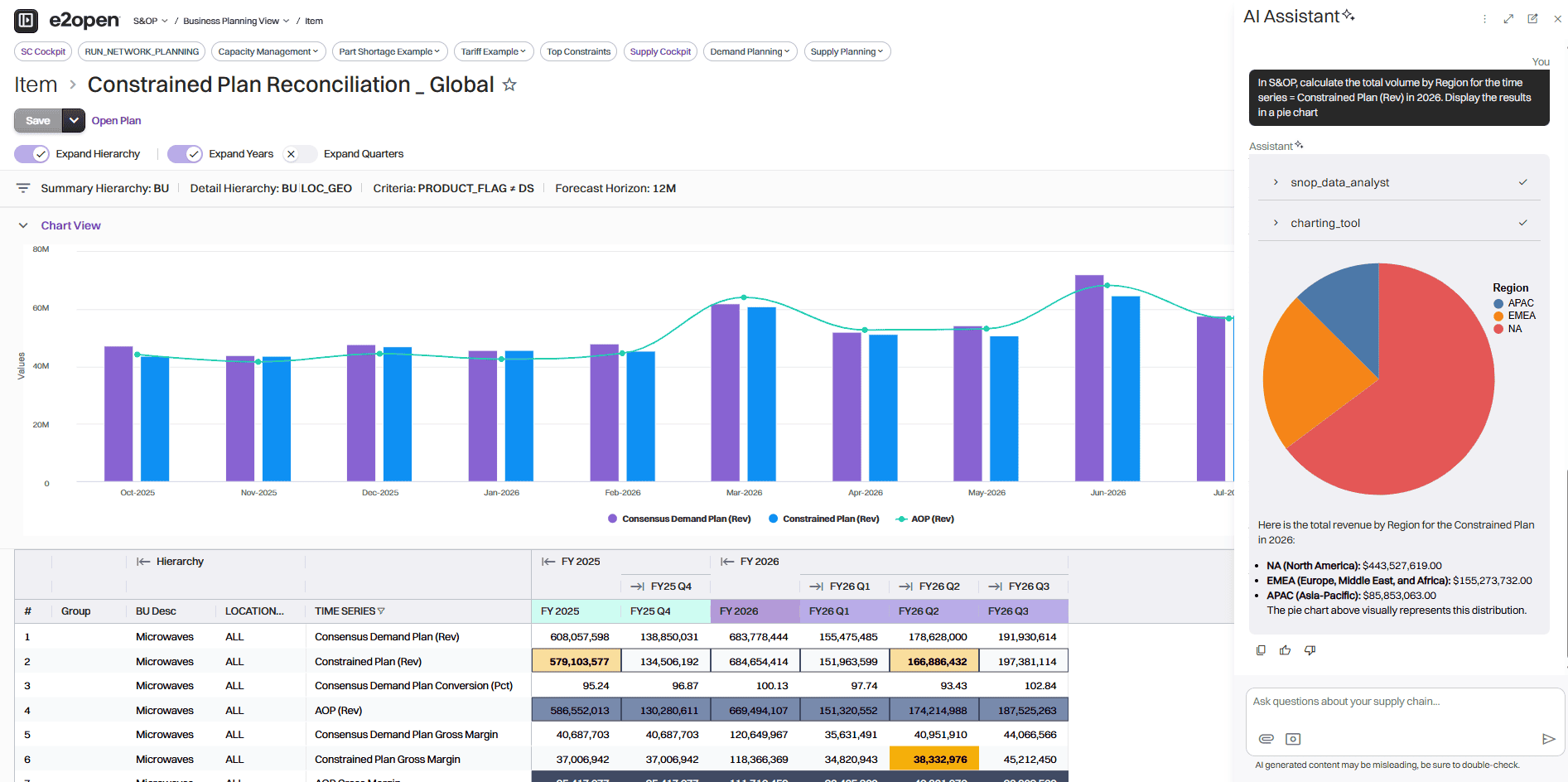
Upskill planners even if they lack certain experience or skills
Consider a new planner dealing with an unexpected disruption in the supply plan from a climate event and isn’t quite sure what to do. Simply engage the agentic digital assistant to instantly learn the root cause is an impacted supplier, gain expert analysis of orders at risk, identify alternative suppliers, compare total landed costs considering tariffs and logistics, screen suppliers for regulatory compliance, and receive detailed step-by-step guidance on how to update purchase orders. Expert answers and actionable insights, fast.
Demand Sensing
Demand sensing technology bridges the gap between forecasted and actual demand by leveraging advanced algorithms and analytics. Outcome: Dynamically adjust inventory levels and fulfillment strategies to avoid stockouts, fulfill orders accurately, and minimize excess inventory.
Demand Planning
Demand planning software uses advanced machine learning algorithms and automation powered by data from all sales channels to help companies anticipate, understand, and shape customer demand. Outcome: Enable faster response times, reduce forecast errors by up to 20 percent, and optimize inventory levels.

Supply Sensing
Supply sensing leverages real-time supply signals to predict the probability of shortages and take proactive steps to minimize disruptions and maintain high service levels. Outcome: Reduce stockouts, prevent lost sales, and strengthen customer loyalty across supply, sales, and service functions.

Supply Planning
Supply planning software accelerates performance with feasible supply plans that quickly adapt to real-world constraints across multiple supplier tiers. Outcome: Commit with confidence. Minimize delays, reduce costs, and meet customer commitments while maximizing the returns on constrained materials, capacities, and resources.

Sales & Operations Planning
Create profitable consensus plans that balance demand, supply, and financial goals through collaborative planning sessions and shared performance metrics. Outcome: Reduce stockouts and improve accuracy by enabling alignment among internal teams and external partners.

Multi-Echelon Inventory Optimization
Optimize finished goods and raw materials at all product levels and stocking locations in the value chain, from internal operations to supplier and channel ecosystems. Outcome: Reduce working capital requirements, improve order fulfillment rates, and minimize waste at all inventory levels, from warehouse to retail.

15-30%
reduction in working capital through inventory optimization

20%
reduction in expedition costs

50%
increase in planner productivity

30-40%
increase in near-term accuracy
FAQs
Connected supply chain planning brings together real-time data, AI-powered forecasting, and collaboration on a single platform. It helps companies respond quickly to market changes and overcome disruptions by connecting demand, supply, inventory, and replenishment across all planning horizons.
E2open uses advanced AI and machine learning to sense demand and supply signals in real time. This bridges the gap between forecasted and actual demand, reducing errors and helping companies avoid stockouts and excess inventory.
Key benefits include multi-enterprise visibility, faster and smarter decisions, improved service and margins, reduced working capital, lower expedition costs, and increased planner productivity.
VPs, heads of supply chain planning, planners, analysts, and cross-functional teams in manufacturing, distribution, and retail use Connected Planning to align supply and demand, optimize inventory, and drive strategic decisions.
E2open helps companies refine NPI forecasting by analyzing patterns across multiple data points, enabling more accurate forecasts and better alignment of new product inventory.
It tackles demand volatility, siloed data, supply disruptions, forecast accuracy, sustainability goals, and the skills gap in planning teams.
The platform connects internal teams and external partners, enabling seamless communication and coordination among suppliers, manufacturers, and distributors to achieve unified business goals.
Demand sensing uses real-time data and analytics to adjust inventory and fulfillment strategies, helping companies avoid stockouts and minimize excess inventory.
Supply sensing leverages real-time supply signals to predict shortages and proactively minimize disruptions and maintain high service levels.
Multi-echelon inventory optimization synchronizes inventory levels between warehouses and retail locations, reducing excess stock and improving order fulfillment rates across the value chain.
E2open’s decision-centric framework aligns planning with execution, finance, and partners, ensuring the right mix of service, cost containment, and growth.
Companies often see a 15–30% reduction in working capital, 20% lower expedition costs, up to 50% increase in planner productivity, and 30–40% improvement in near-term forecast accuracy.
E2open’s AI is built in, not bolted on. It powers real-time forecasting, scenario planning, and autonomous decision-making, helping planners focus on strategic growth instead of firefighting.
Yes. The platform helps balance cost efficiency with ESG and compliance requirements, helping companies meet their sustainability targets.