
Latest news

Last-mile delivery plans cannot stay static
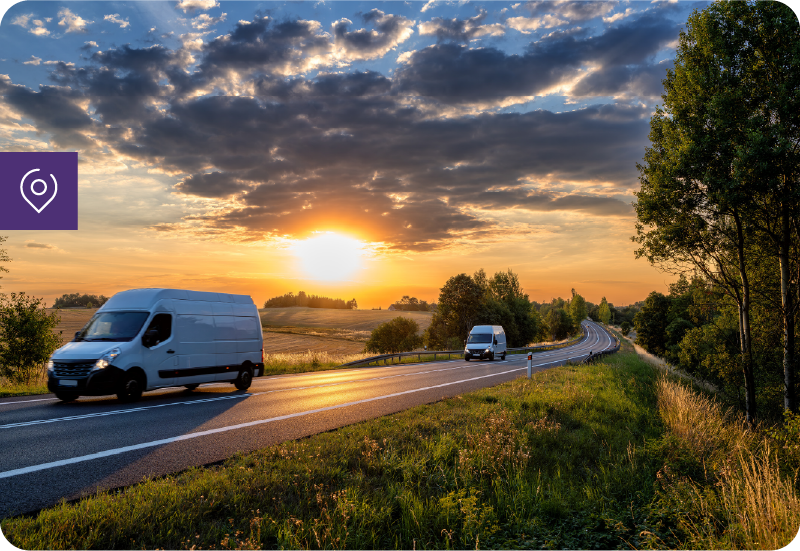
Delivery operations rarely go exactly as planned. New jobs get added. Traffic shifts. Drivers run ahead or fall behind. Customers update preferences. Equipment, capacity, and service-level constraints change throughout the day.
Yet many organizations still plan routes in one system, manage exceptions in another, and rely on phone calls, spreadsheets, or manual workarounds to keep deliveries moving. When systems don’t talk, small disruptions become expensive ones, and it can lead to:

Higher delivery costs

Underused drivers and vehicles

Missed delivery windows

Customer service teams that lack timely answers
For 3PLs, carriers, postal and parcel operators, distributors, and private fleet owners, the challenge is clear: last-mile teams need a better way to keep planning and execution aligned as the day changes.
How teams improve last-mile delivery planning and execution
Vehicle Routing and Scheduling gives delivery teams a more dynamic approach to last-mile delivery planning. Instead of building a route plan once and reacting manually when disruptions occur, teams can use real-world constraints and live operational data to optimize routes, assign work, and adjust plans throughout the day.
With e2open Vehicle Routing and Scheduling, planners and dispatchers can move from reactive coordination to exception-based management. The platform helps teams create optimized delivery plans, monitor execution, and respond quickly when conditions change in the field.
That means operations teams can:

Optimize routes around delivery windows, job requirements, available equipment, driver hours, traffic patterns, and service commitments

Replan faster when new jobs, delays, cancellations, or disruptions occur

Reassign work based on driver location, capacity, schedules, and route impact

Keep dispatchers, drivers, depots, and customer-facing teams working from more consistent operational data

Provide customers with stronger visibility through delivery updates, ETAs, and status information
The result is a more connected delivery operation where teams can make better decisions before issues become service failures.

What’s ahead: Vehicle routing and scheduling helps teams manage by exception and adapt faster
E2open Vehicle Routing and Scheduling connects planning, dispatch, and execution in a single AI-powered platform. It helps teams build practical delivery plans based on real-world operating conditions, then continuously update those plans as the day unfolds.
Agility is crucial for high-volume delivery operations. A plan that looked efficient at 7 AM might be obsolete by 10 AM, after delays and reroutes. With e2open, delivery teams can:


Improve driver and vehicle utilization by matching work to the best available resources

Protect on-time delivery performance by identifying issues earlier and adjusting routes faster

Reduce manual coordination by replacing disconnected calls and spreadsheets with integrated dispatch and scheduling software

Manage by exception with visibility into route progress, disruptions, and operational priorities using fleet routing software

Strengthen customer experience with more accurate ETAs, delivery updates, and shipment status information

Support continuous improvement through reporting and analytics that help teams measure delivery and driver performance
For logistics providers, carriers, postal and parcel networks, utilities, distributors, and private fleets, vehicle routing and scheduling helps them improve service, control cost, and gives teams the confidence to keep moving when the day does not go as planned.
See how e2open helps last-mile teams plan smarter
These outcomes compound across the e2open Logistics suite. Vehicle Routing and Scheduling works alongside Transportation Management, Global Parcel, and Logistics Visibility, all built on a single platform and powered by e2open's approach to AI. Last-mile delivery requires connected route planning capabilities and last-mile delivery software that bring planning, dispatch, driver execution, and delivery data together so teams can adapt in real time.
Watch the Introduction to VRS video to see how AI route optimization helps delivery teams improve visibility, utilization, agility, and customer service.
See how VRS supports different last-mile operating models.
Explore the e2open Vehicle Routing and Scheduling solution brief for 3PLs or fleet owners to learn how AI-powered routing, dispatch, and execution can help improve efficiency, responsiveness, and control.
E2open subscription center
Subscribe to receive e2open updates
Interested in learning more? Stay current with the latest e2open news – from company updates to thought-leadership pieces, and so much more!