
Latest news
What is the difference between logistics visibility and supply assurance?
Logistics visibility tells you where a shipment is and when it is likely to arrive. Supply assurance tells you what that arrival means for the orders, production lines, and customer commitments waiting on it, early enough to do something about it.
The distinction matters because visibility on its own does not change an outcome. A delay that is visible but disconnected from business context produces an alert. The same delay, connected to the order and production plan it affects, produces a decision.

Four steps to align logistics execution with supply decisions
You do not need to wait for a full transformation effort to start. Organizations can identify where the visibility-execution gap is causing the most pain and build from there:

Identify your highest-impact gap: which disruptions cost the most to resolve, which delays surprise you most often, and which functions are most disconnected from each other

Connect execution signals to at-risk decisions: for most organizations this means linking inbound logistics signals to production planning, so risks surface while there is still time to act

Extend visibility to suppliers and partners: bring key suppliers into early visibility and forecasting, so mismatches are caught upstream rather than downstream

Unify cross-functional data and workflows: connect procurement, planning, and logistics on a shared data backbone, removing manual coordination from the critical path
The business impact of closing the gap
The infographic sets out five outcomes organizations see when execution signals reach the decisions that depend on them, and explains why they compound over time:

Act earlier and reduce disruption impact, so production lines keep running and expediting becomes the exception rather than the default

Reduce expediting costs and line stoppages, with fewer surprises surfacing too late to manage

Improve on-time supplier and delivery performance, with fewer conflicting signals to suppliers and less manual reconciliation

Right-size inventory across the network, with safety stock based on actual conditions rather than assumptions

Shift from reactive to proactive management, so planners plan and buyers optimize instead of firefighting


How e2open closes the gap
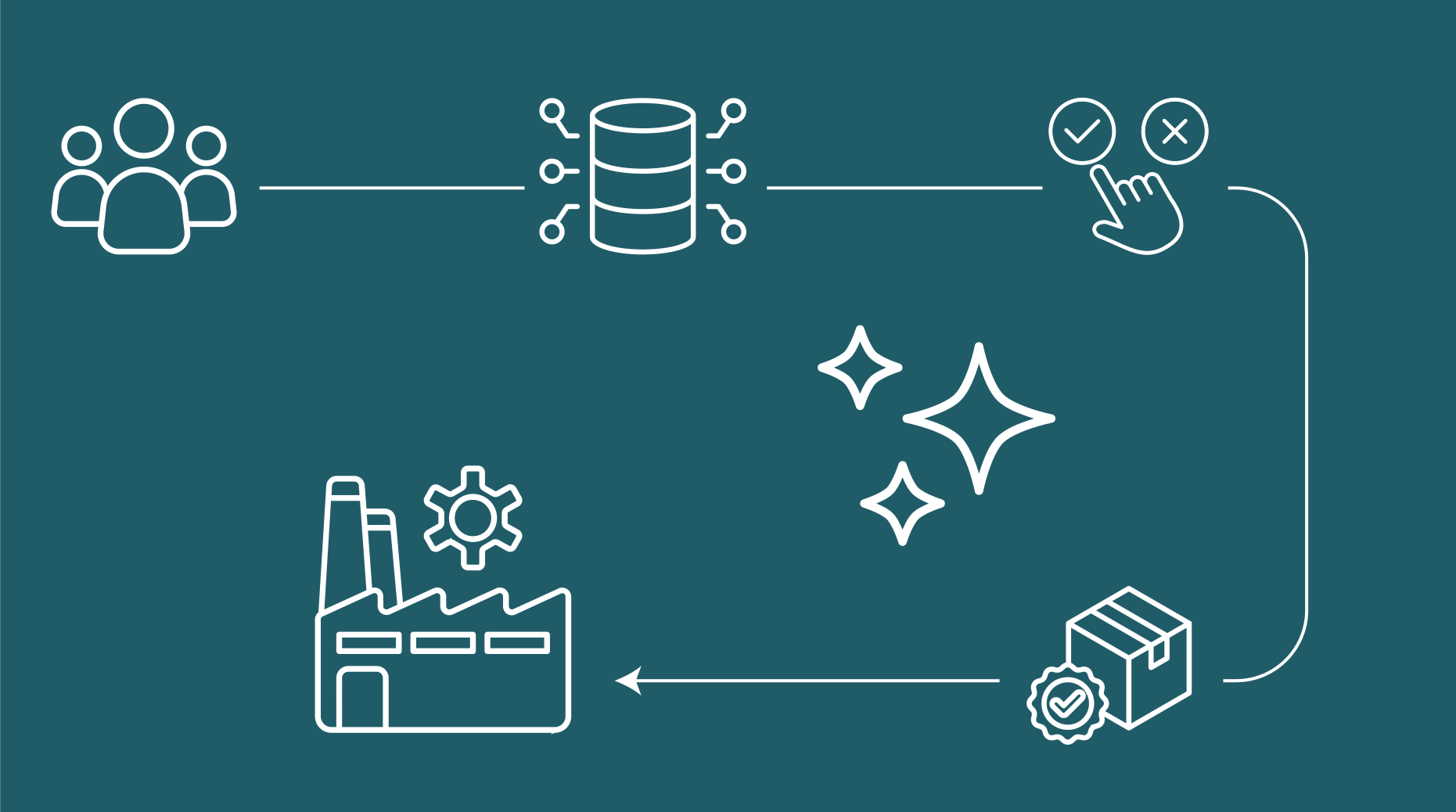
The pattern behind all five outcomes is a short chain: early visibility means fewer surprises, fewer surprises mean faster decisions, and faster decisions mean better outcomes. E2open brings the commercial relationships and the physical flow of goods together on a single platform so teams can:

Connect in-transit events to the orders, parts, and production plans they affect, so only disruptions with real business impact surface as exceptions

Detect risk early enough to act, with corrective options presented in business context rather than as raw shipment alerts

Work from one shared view of supply reality across procurement, logistics, planning, and production

Track supplier commitments forward, so mismatches surface upstream before a shipment is missed

See inventory across supplier sites, in transit, and internal locations, so allocation decisions reflect what is actually available
E2open connects more than 500,000 manufacturing, logistics, channel, and distribution partners as one multi-enterprise network tracking over 18 billion transactions annually.
Ready to turn visibility into supply assurance?
Closing the visibility-execution gap starts with connecting the teams, data, and decisions that determine supply performance. Download the infographic and see where to start.
Additional resources
INFOGRAPHIC
The Visibility-Execution Gap: Why Visibility Doesn’t Guarantee Supply Assurance
The four structural gaps behind the problem, and why they persist even in organizations that have already invested in visibility tools.
EBOOK
Supply and Logistics Collaboration: Turning Visibility into Supply Assurance
How leading organizations connect supplier, logistics, and planning data to close these gaps and improve supply assurance.
VIDEO
Inside Jabil's Transformation
How one global manufacturer digitalized supplier forecast communication across its entire supply base to strengthen customer commitments.
E2open subscription center
Subscribe to receive e2open updates
Interested in learning more? Stay current with the latest e2open news – from company updates to thought-leadership pieces, and so much more!