

Organizations with cross-border supply chains operate amid volatile, fragmented, and increasingly stringent regulations. While tariff costs are usually anticipated in supply chain sourcing analysis, the central risk often lies in overlooked non-tariff compliance obligations, which are rarely made explicit or factored into early decision-making.

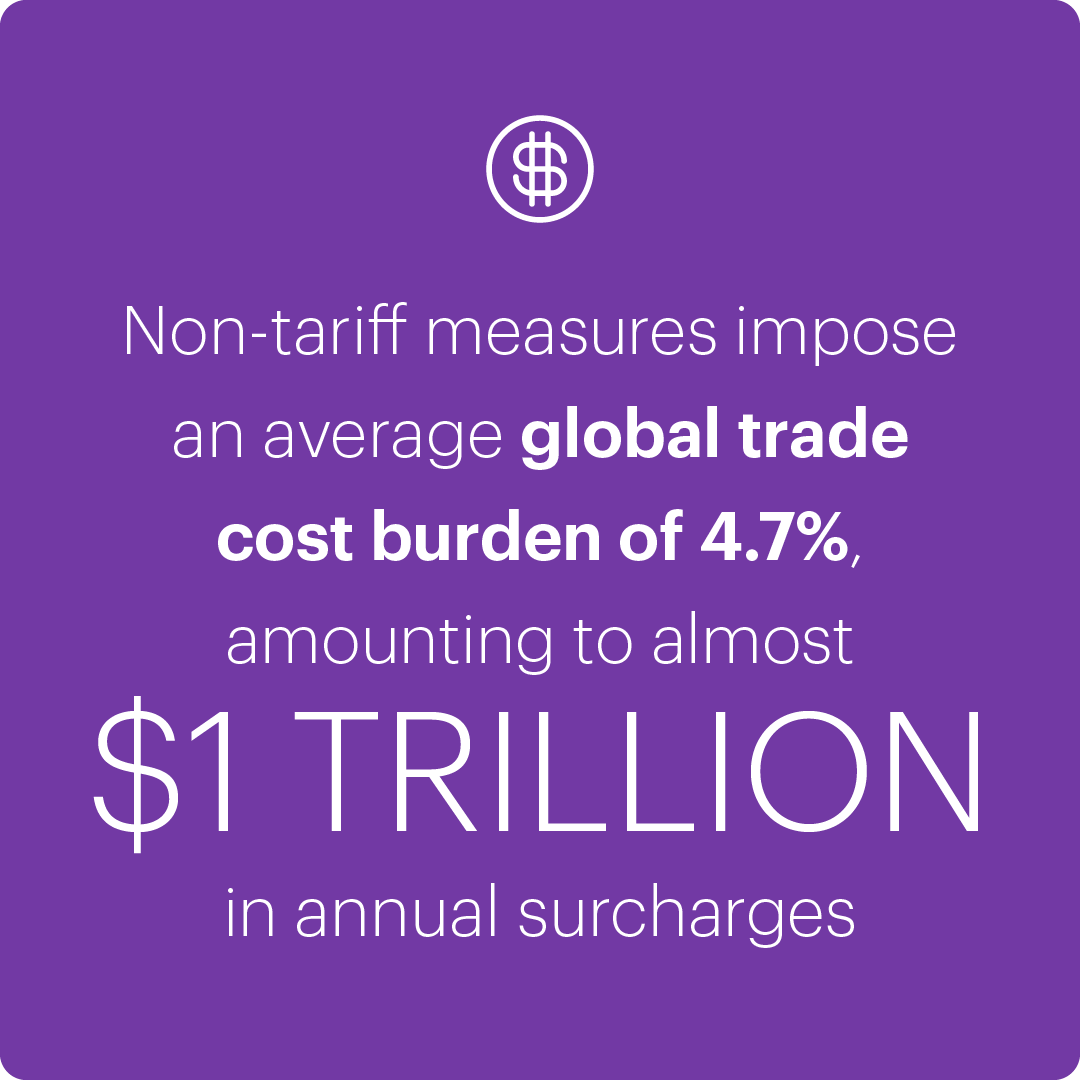
These requirements include specific licensing requirements, sanctions screening, export controls, ownership-based affiliation rules, antidumping and countervailing duties, product specific certifications, quota management, detailed documentation mandates, ESG, and forced-labor regulations. That’s not even the full list. These measures have collectively grown substantially in scale and complexity. According to the United Nations Conference on Trade and Development (UNCTAD), nontariff measures impose an average global trade cost burden of 4.7%, amounting to almost $1 trillion in annual surcharges.
To move from awareness to action, it’s important to dig deeper into how non-tariff compliance obligations manifest in daily operations. Non-tariff measures create new categories of risk that change frequently and impact every link in the supply chain. Understanding what’s at stake and where traditional processes break down is the first step to building resilience into supply chain sourcing decisions.
How do non-tariff measures create risk?
Constant regulatory movement
Sanctions updates, export control changes, new ownership screening rules, quota adjustments, and country-level documentation changes occur daily. A single rule change from agencies such as the Bureau of Industry and Security (BIS) or the Office of Foreign Assets Control (OFAC) can quickly alter whether a supplier is compliant or whether a product is eligible for preferential duties. Without continuous monitoring, teams may proceed using outdated data.
Fragmented requirements across jurisdictions
Each country requires a unique set of data elements, certifications, and documents for import, export, licensing, and screening. Even similar products can fall under different rules depending on their materials, use, or destination.
This fragmentation creates room for error. For example:
- Inconsistent documentation across transactions increases the likelihood of customs intervention.
- Varied data element rules expose teams to inadvertent misclassification or incomplete declarations.
- Divergent ownership screening expectations require deeper insight into multi-tier corporate structures, including indirect affiliates.
- Unpredictable quota dynamics may halt shipments entirely once fill thresholds are reached.
When one jurisdiction’s requirements change, organizations must immediately adjust their workflows. However, many lack systems to quickly update sourcing, procurement, and logistics across the business.
Manual compliance workflows and strained resources
Manual processes can no longer keep up with the speed of regulatory change. Key risks include:
- Misclassification of products due to outdated tariff schedules or export control numbers
- Incorrect or missing certificates, licenses, or declarations
- Delayed restricted party screening with insufficient monitoring of ownership changes
- FTA eligibility determinations that occur too late to capture benefits
Missing a requirement can cause a cascade of operational issues: rework, customs holds, extra duties, unplanned fees, missed deadlines, and lost savings. In just-in-time models, even short delays can hurt finances.
Beyond operational disruptions, regulators are increasingly enforcing strict rules. Recent penalties include multi-million-dollar fines for export-control breaches, GDPR violations, anti-money-laundering failures, and indirect transactions with sanctioned entities. These examples demonstrate that compliance errors now carry strategic consequences, not just administrative penalties.
How compliance directly shapes sourcing and profitability
Compliance risk is no longer isolated to legal or regulatory teams. It affects decisions across sourcing, procurement, and logistics, shaping:
Supplier selection
Low prices are meaningless if a supplier is linked to a restricted party, is in a high-risk jurisdiction, or is subject to export controls. Without insight into ownership or affiliate rules, teams may pick partners that threaten continuity.
Trade lane planning
Some routes require specific licenses, are subject to quota limits, or involve ADD/CVD risks. Routes that seem cost-efficient can cause delays or extra charges if rules change mid-execution.
Origin and end use validation
FTA eligibility, rules of origin, and end-use rules affect duty savings and compliance. Misreading rules destroys expected savings and can trigger retroactive penalties.
Operational reliability
Customs delays tied to outdated data or missing documents can halt production. In industries dependent on just in time delivery, a single compliance oversight can derail an entire schedule.
Reputation and ESG alignment
Forced labor bans, ESG mandates, and regional compliance rules require deep supply-chain insight. Businesses must see materials and partners at every tier—not just Tier 1—to protect market access.
The fallout of getting compliance wrong
Regulations are stricter than ever. Enforcement actions keep rising, and penalties are now common. This year we have seen:
- Million-dollar fines for export violations
- Operational shutdowns due to missing licenses
- Market access restrictions
- Supply chain disruptions that ripple upstream and downstream
- Brand and reputational damage amplified across global partners
Compliance failures are not just expensive—they are public, and their effects persist. Rebuilding trust takes much longer than fixing the issue.
The way forward: Real-time, automated, content- driven compliance
Effective supply chain resilience and financial outcomes now depend directly on integrating compliance into core operations. Relying on disconnected, manual checks make organizations vulnerable to mounting costs and disruptions, eroding competitive advantage.
Companies that turn compliance into an advantage will integrate:
-
- Real-time global trade content
- Automated compliance checks are built directly into sourcing, procurement, and order management workflows.
- Supplier mapping tools that reveal ownership structures and affiliated risks
- Multitier supply chain visibility
- Centralized trade content that replaces fragmented data sources
This is where platforms like e2open deliver a significant advantage: the integration of the platform (workflow automation) and the global trade content itself. While many systems require external data feeds, e2open centralizes both, giving teams a consistent, authoritative foundation for decision making across all industries and regions.
Organizations adopting integrated, content- driven compliance capabilities are better positioned to:
- Surface compliance risks early, before purchasing decisions are made.
- Protect savings tied to FTAs, origin validation, and duty programs.
- Reduce delays and prevent costly rework.
- Confidently onboard suppliers with visibility into ownership and risk
- Strengthen resilience across every tier of the supply network.
Non-tariff costs and risks are central to global sourcing decisions yet often remain hidden until they impact operations or profits. Proactively surfacing these compliance risks with real-time insight enables more predictable, confident decision-making.
Get the full picture—beyond tariffs
Tariffs are only part of the story. To fully understand your real landed cost and exposure, you need visibility into compliance risks below the surface.
Our latest whitepaper uncovers hidden layers of global trade risk. It shows how organizations can protect margins, build resilience, and make better international sourcing choices.
Read the full whitepaper: Looking Past Tariffs: Revealing Unseen Compliance Challenges Affecting International Sourcing Choices