
Latest news

Key takeaways
- What is a supply chain control tower? A supply chain control tower is a digital, real-time system that provides end-to-end visibility across supply, logistics, and distribution by unifying data from internal applications and external partners on a single platform.
- Why do discrete manufacturers need it? Automotive, high-tech, industrial manufacturing, and aerospace and defense companies operate complex, multi-tier supply chains with long lead times, strict compliance requirements, and high sensitivity to disruption, making real-time visibility essential.
- How does a digital supply chain control tower improve visibility? By consolidating operational data into a single environment, a control tower provides real-time insight into delays and constraints. This visibility helps teams identify disruptions early and respond before issues escalate.
- What are the key benefits? Faster response to disruptions, reduced production downtime, better compliance oversight, earlier insight into supplier risks, more accurate ETAs and stronger resilience across global operations.
- Why e2open? E2open delivers a unified, network-based control tower that connects manufacturers with suppliers, logistics providers, and trade partners across every tier, providing early alerts, multi-tier visibility, and a single source of decision-grade data to improve agility and continuity.
Discrete manufacturers operate some of the most complex supply chains in the world. In industries such as automotive, high tech, industrial manufacturing, and aerospace and defense, companies must coordinate thousands of parts across globally distributed supplier networks.
With high product complexity and strict service-level expectations, even small delays or information gaps can ripple across the entire network. These industries depend on accurate, real-time visibility — not only to track inventory and shipments, but to keep production aligned and maintain continuity when conditions shift.
What is a supply chain control tower?
A supply chain control tower is a digital, real-time system that provides end-to-end visibility across supply, logistics, and distribution. Unlike traditional tracking tools that offer isolated snapshots, a digital supply chain control tower brings internal and partner data into one place. Carriers, suppliers, freight forwarders, contract manufacturers, and other ecosystem partners all connect through a single, unified platform.
With this consolidated view, teams can monitor orders, shipments, inventory movements, disruptions, and exceptions as they happen. A control tower in supply chain management helps identify early warning signals, including emerging delays or compliance risks, before they escalate.
By harmonizing data and giving teams the ability to act on it quickly, a control tower for supply chain operations supports faster decision-making, stronger collaboration and more resilient end-to-end performance. It provides the visibility and intelligence needed to run complex, multi-tier supply chains with greater confidence and agility.
Why discrete manufacturers struggle with visibility
For discrete manufacturers, visibility challenges extend beyond the sheer volume of parts moving through the network. Ongoing uncertainty and tightly-linked operations make it harder to maintain clarity, while extensive documentation requirements add friction at every handoff across the supply chain.
Here’s where visibility breaks down most often:
- Complex, multi-tier supplier ecosystems: Thousands of components are sourced globally, each with its own constraints and lead-time variability.
- Long and unpredictable lead times: Production and logistics cycles span regions, carriers, and suppliers, increasing the risk of hidden delays.
- Compliance-heavy workflows: Documentation, export controls, certifications, and traceability requirements create additional checkpoints that must be monitored end-to-end.
- Volatile logistics networks: Capacity shortages, routing changes, and cross-border movements introduce variability that’s difficult to track in real time.
- High sensitivity to any disruption: In these industries, even a single missing part can stop production, trigger penalties, or delay customer commitments.
Without integrated visibility, early warning signs are often missed and responses come too late. Decisions tend to happen in silos, which slows coordination between internal teams and external partners. Over time, this lack of clarity erodes performance and makes it harder for manufacturers to maintain reliable operations.
How a digital supply chain control tower improves visibility
A modern supply chain control tower improves visibility by treating the entire network as one connected system rather than isolated segments. Instead of relying on scattered updates from suppliers, logistics partners, and internal teams, it consolidates all signals into a single, real-time environment. Orders, shipments, capacity changes, and compliance checkpoints all flow into the same view. This unified view helps manufacturers understand how delays, constraints, and disruptions ripple across the supply chain so they can respond before issues escalate.
Predictive intelligence then scans this data for early signs of disruption, from supplier constraints to transportation delays, and recommends the best response.
Visibility across supply, logistics, and production
A modern control tower creates transparency across all the touchpoints where materials are held, moved, or processed. Each point in the network feeds real-time data into the platform.
- Real-time shipment and order tracking: Monitor inbound materials, work-in-process (WIP), and outbound shipments across global lanes.
- Multi-tier supplier insights: Surface upstream signals from tier 2 and tier 3 suppliers to detect risks earlier.
- Production and inventory alignment: Link material flows to production schedules to keep builds synchronized with actual supply.
Data integration and actionable intelligence
The power of a control tower comes from connecting many data sources and transforming them into decision-ready insights. This makes it possible to quickly identify emerging issues and assess response options.
- Predictive alerts: AI identifies delays, compliance risks, bottlenecks, and capacity issues before they escalate.
- Exception management: Prioritize the most critical issues so teams can focus where it matters.
- Scenario analysis: Evaluate how disruptions such as delayed shipments or supplier constraints affect downstream operations and service levels.
Key capabilities of a modern control tower
At the core, control towers integrate data from enterprise resource planning (ERP), transportation management systems (TMS), warehouse management systems (WMS), and partner systems so suppliers, carriers, and internal teams see the same information. Supplier commitments, transportation milestones, trade documents, and production schedules flow into one operational picture, reducing the blind spots that often lead to unplanned downtime or last-minute expediting.
Alongside these core capabilities, control towers add important layers of operational support, including:
- Multi-enterprise collaboration ensures everyone sees the same milestones and constraints.
- Unified documentation visibility helps teams stay ahead of customs holds, export rules, and compliance requirements.
- Consistent data models can eliminate discrepancies and provide the foundation for faster analysis and response.
Together, these capabilities help manufacturers turn a complex flow of supplier, logistics, and production data into clear signals that support proactive decision-making and smoother execution across the network.
Benefits for discrete manufacturing industries
A digital supply chain control tower strengthens operations across every stage of discrete manufacturing. The most impactful benefits include:
- Faster response to disruptions: Early alerts give teams time to adjust plans and identify alternatives before delays escalate.
- Reduced production downtime: Real-time insight into materials and supplier status prevents last-minute surprises that halt build schedules.
- Improved coordination across partners: Shared visibility keeps carriers, logistics providers, and suppliers aligned, reducing communication gaps and resolution time.
- Better compliance management: Centralized oversight of export controls, certifications, and customs documents reduces the risk of delays caused by missing or incorrect paperwork.
- Lower risk of shortages: Multi-tier supplier insights reveal upstream constraints sooner, allowing proactive mitigation instead of reactive expediting.
- More accurate ETAs and customer commitments: Predictive visibility improves reliability in delivery schedules and strengthens downstream planning.
- Stronger resilience and agility: Connected data and coordinated decision-making make it easier to adapt to demand shifts, supply issues, or logistics volatility.
Real-world scenarios where control towers deliver impact
A digital supply chain control tower becomes most valuable when the complexity of discrete manufacturing makes it difficult to anticipate issues early or coordinate responses across partners. Here’s how it creates meaningful impact across key industries:
Automotive
Automotive supply chains rely on thousands of components sourced from multi-tier suppliers worldwide. A delay from an upstream tier 2 or tier 3 provider can ripple into plant slowdowns or full production stops. With a control tower, manufacturers can track supplier commitments, shipment milestones, and material flows across all tiers in real time. When constraints emerge, planners can reallocate limited parts across plants or vehicle programs to protect high-priority builds and prevent costly downtime.
High tech
High-tech manufacturers face compressed product lifecycles and a heavy reliance on specialized components that may be produced by only a handful of suppliers. When a critical semiconductor or subassembly becomes constrained, the impact is immediate and widespread. A control tower identifies early signals of component shortages, exposes upstream bottlenecks, and highlights available inventory across the network. This allows teams to reroute supply, secure alternatives and keep production aligned with rapidly shifting customer demand.
Industrial manufacturing
Industrial manufacturing supply chains operate across long planning horizons and global freight networks, which makes disruption harder to anticipate. When materials are delayed in transit, production plans often have to change with little notice. A control tower provides continuous visibility into freight movement and flags issues as they emerge, allowing teams to intervene earlier. With clearer insight, manufacturers can adapt plans in time to prevent small delays from cascading into larger operational disruptions.
Aerospace & defense
Aerospace and defense manufacturers operate in compliance-heavy environments with stringent documentation, certification, and traceability requirements. Missing paperwork or an incomplete export record can hold shipments at borders or delay assembly of mission-critical systems. A control tower centralizes visibility into certifications, export controls, and documentation status across all partners. This ensures every part and shipment is traceable, compliant, and cleared, preventing administrative delays that can disrupt tightly orchestrated builds.
Future trends shaping control tower adoption
As supply chains grow more complex and operate at a faster pace, the role of digital control towers continues to expand. New technologies are pushing visibility beyond simple tracking and into continuous prediction and more automated, collaborative decision-making. Several trends are accelerating this shift.
AI-driven predictive insights
Artificial intelligence is becoming central to control tower performance. Instead of reacting to late updates, AI continuously evaluates patterns across the supply chain to surface potential risks sooner. This forward-looking insight gives teams more time to respond to disruptions and protect production schedules and customer commitments.
Digital twins for logistics and supply visibility
Digital twin technology creates a virtual model of the supply chain, allowing teams to simulate disruptions, test response strategies, and understand downstream impacts. This capability helps manufacturers evaluate “what-if” scenarios in seconds and choose the most resilient path forward.
Real-time data integration with ecosystem partners
The next generation of control towers connects carriers, suppliers, forwarders, brokers, and manufacturing systems through shared, continuously refreshed data. This real-time flow reduces blind spots, enables faster decision-making, and keeps all partners aligned on the same operational picture.
Sustainability metrics and carbon visibility
As manufacturers face new reporting requirements and environmental goals, control towers are expanding to support sustainability tracking as part of day-to-day operations. Clear visibility into emissions and routing decisions helps teams make more informed tradeoffs while maintaining operational performance across global networks.
Increased automation of routing, replanning, and exception handling
With more data available and more intelligence applied, control towers are shifting from manual oversight to automated action. Systems can increasingly recommend reroutes, adjust plans based on constraints, or resolve low-impact exceptions with minimal human intervention, freeing teams to focus on strategic issues.
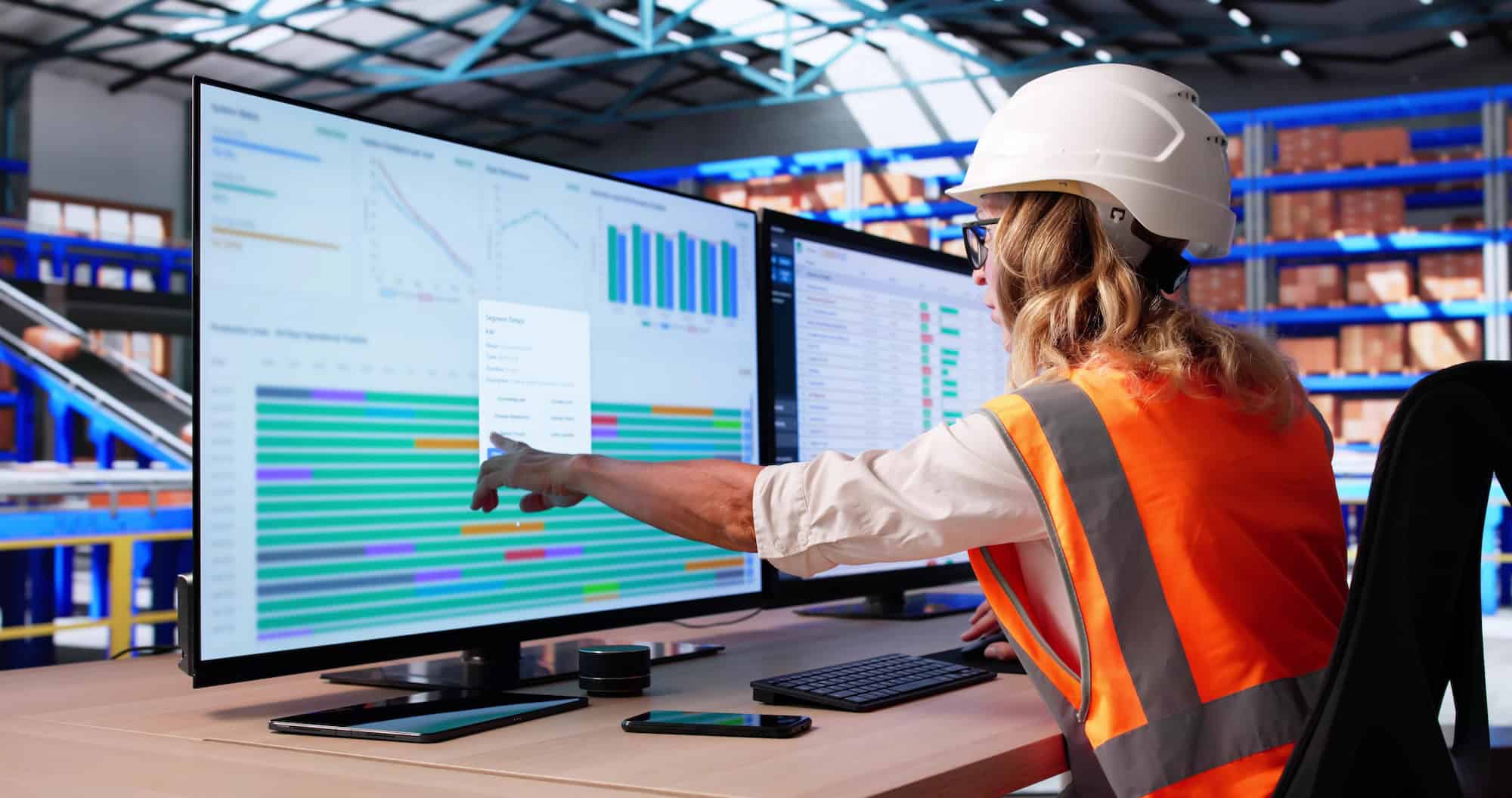
How e2open supports control tower visibility
Discrete manufacturing demands more than basic tracking. E2open connects suppliers, logistics providers, and trade partners through a unified, network-based platform that delivers real-time visibility across every movement and milestone. With early alerts, multi-tier insights, and integrated data, teams can respond faster and keep production aligned when conditions shift.
Learn how e2open’s control tower capabilities help manufacturers stay agile, resilient, and connected.
Latest
Subscribe to Receive e2open Updates
E2open Subscription Center
Interested in learning more? Stay current with the latest e2open news – from company updates to thought-leadership pieces, and so much more!