
Latest news
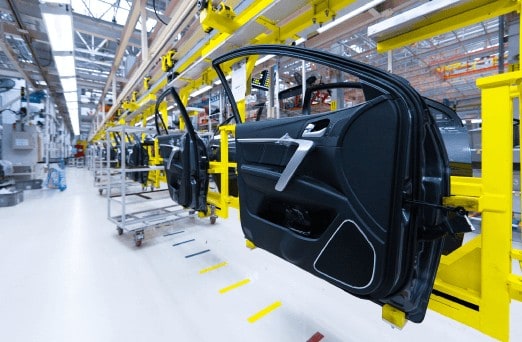
Automotive supply chains must modernize to keep up with increasing demand for electric vehicles—despite new headwinds.
EV adoption faces mixed signals
The soaring popularity of Electric Vehicles (EVs) has changed the face of the automotive industry forever. Global EV sales surged in 2024, but 2025 has brought challenges for the industry. In the U.S., the discontinuation of the $7,500 federal EV tax credit in September triggered a nearly 49% drop in EV sales in October, prompting automakers to rethink strategies and even delay launches. Jaguar Land Rover (JLR), for example, pushed back its first all-electric Range Rover to early 2026, despite more than 60,000 customers on the waitlist.
Meanwhile, China continues to dominate EV adoption and battery supply chains, accounting for two-thirds of global EV sales in 2024 and expanding subsidies by $11 billion in 2025 to maintain momentum. Europe’s growth remains modest, as automakers balance strict EV targets with profitability challenges.
Rerouting: ensure complexity doesn’t lead to chaos
Unprecedented demand shifts extend from manufacturing and charging stations to software and firmware updates. But the complexity of EV supply chains is now compounded by geopolitical risks and tariff pressures. U.S. import tariffs of up to 25% on vehicles and parts have driven OEMs to accelerate nearshoring and reshoring strategies, moving production closer to home to reduce exposure to overseas risks.
Poor visibility into inventory across multi-tier suppliers still means poor visibility of supply risk. A single disruption—such as the recent Nexperia semiconductor shortage caused by a geopolitical dispute between China and the Netherlands—can halt production globally, proving that even low-cost chips are critical.
Manufacturers are investing in digital supply chain platforms to monitor upstream and downstream stakeholders, from raw materials to dealers and recyclers. Visibility into nth-tier suppliers is no longer optional—it’s essential for agility and resilience.
No easy wins when it comes to shortages
Shortages of semiconductors and battery metals remain a thorn in the industry’s side. In late 2025, a chip supply shock linked to Nexperia disrupted production for Honda, Nissan, and Bosch, underscoring the fragility of just-in-time practices.
Nearshoring and reshoring are gaining traction as short-term fixes, but raw material constraints mean global sourcing remains unavoidable. Leaders must combine these moves with long-term planning and circular strategies, such as battery recycling and second-life applications, to mitigate risk.
Fueling up for the road ahead
Connecting the dots between thousands of suppliers and stakeholders may seem daunting, but it’s the only way forward. A connected, data-driven supply chain enables proactive risk management, reduces lead times, and improves customer experience.
Historically, automotive supply chains focused on globalization, outsourcing, and cost optimization. Today, resilience, visibility, and sustainability are the new imperatives. Geopolitical instability, policy shifts, and fluctuating demand require a future-proofed supply chain strategy that integrates advanced planning, execution, logistics, and trade compliance.
The EV revolution isn’t slowing down globally—even if regional adoption faces bumps. Manufacturers that embrace visibility, agility, and collaboration will be best positioned to thrive as the industry accelerates toward electrification.
How e2open can help
We’re helping some of the most innovative automotive companies modernize their supply chain planning, execution, logistics, and global trade processes to excel in a world of uncertainty. Drop us a line, and let’s talk about how we can help you succeed.
Latest
Subscribe to Receive e2open Updates
E2open Subscription Center
Interested in learning more? Stay current with the latest e2open news – from company updates to thought-leadership pieces, and so much more!